


How to choose batteries for an off-grid cabin
Benefits of Battery Storage

Suitable battery types

Assess your electricity needs & estimate daily and seasonal electricity consumption & determine battery capacity 

Recommended ECO-WORTHY LiFePO4 Lithium Battery Models for Off-Grid Cabins

Series and parallel connection of batteries 

Summary


          Many people choose to live off the grid and seek tranquility in nature, far from the noise of the cities. Breaking free from grid dependence and relying on renewable resources such as solar and wind energy gives off-grid living a unique appeal and a special challenge. Battery storage systems play a crucial role in this lifestyle without a connection to the conventional power grid.


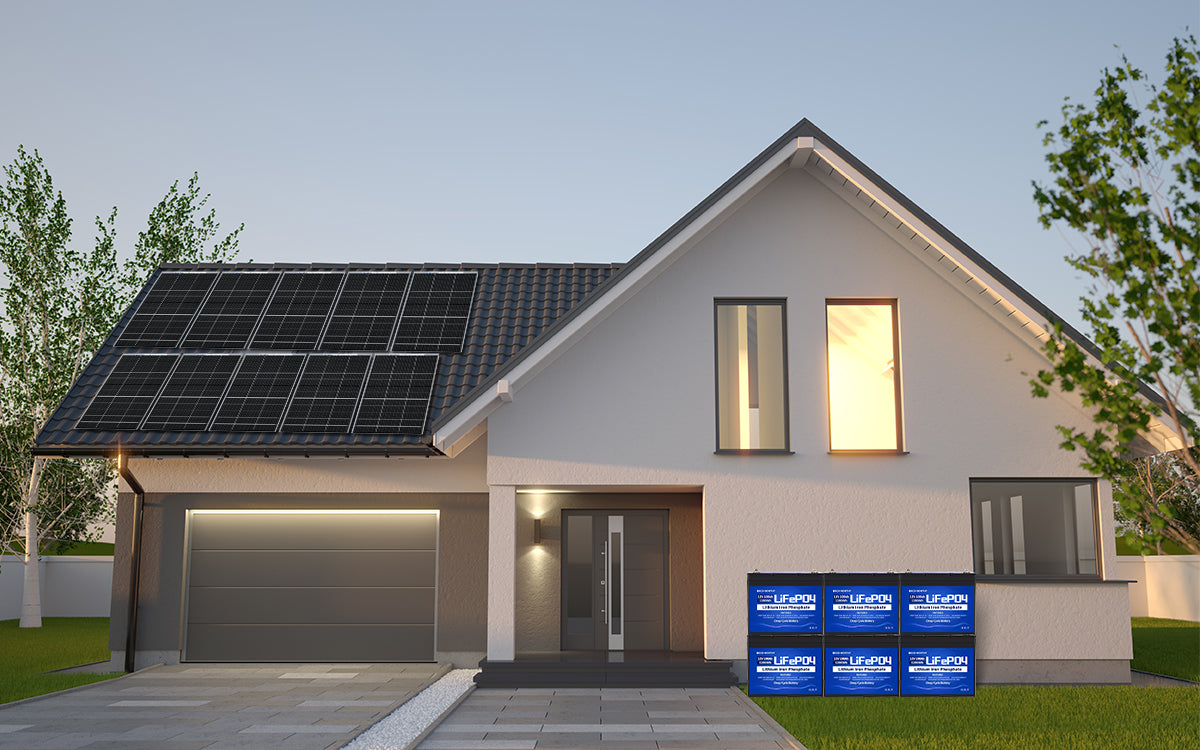
          Battery storage systems are the core component of off-grid power supply systems. They balance the generation of renewable energy and electricity demand and ensure a stable power supply, even when sunlight or wind is insufficient. Whether for daily lighting or the operation of household appliances – battery storage systems are the key to a reliable power supply in off-grid households. The choice of the right battery chemistry and the development of a suitable battery storage system directly determine the sustainability of off-grid living.


Advantages of battery storage

  • Ensuring the power supply: Battery storage systems can provide emergency power during power outages or insufficient solar power generation, thus ensuring the important power supply for private households and emergencies. 
  • Optimized use of renewable energies: In combination with solar panels and other renewable sources, a battery storage system can store excess electricity from renewable energies and release it when needed, thereby maximizing the efficiency of renewable energy use. 
  • Reduced dependence on fossil fuels: By using battery storage systems and renewable energy, off-grid households can significantly reduce their dependence on fossil fuels such as diesel generators, thus lowering operating costs and CO2 emissions. 
  • Improved reliability of the power supply: Even during prolonged cloudy weather or extreme conditions, battery storage systems can maintain a stable power supply, thus significantly improving the reliability of households without a grid connection. 
  • Easy installation and maintenance: Compared to other emergency power solutions, battery storage systems are relatively easy to install and maintain and require only minimal professional maintenance, making them suitable for the off-grid needs of homes.

Suitable battery types 

          The most commonly used battery types in off-grid systems include lead-acid batteries and lithium iron phosphate batteries (LFP). Each type has its advantages and disadvantages: 

  • Lead-acid batteries are cost-effective and widely available, but have a shorter lifespan and lower energy density. 
  • Lithium iron phosphate batteries (LFP) represent a compromise: They are safer than conventional lithium-ion batteries, have a longer lifespan, and are cheaper than high-end lithium batteries.

     Assess your electricity needs 

         Determining the electricity consumption of various appliances and systems in your off-grid home is the first step in assessing your electricity needs. We need to carefully list all electrical appliances, including lighting, kitchen appliances, and entertainment devices, and record their rated power. This forms the basis for the subsequent electricity consumption analysis.  


A typical off-grid home might include the following, for example:  

  1. Lighting: 10W LED bulbs x 8 = 80W 
  2. Television: 40-inch LED TV, 60 W 
  3. Refrigerator: 150W 
  4. Computer: Laptop 50 W 
  5. Kitchen appliances: Microwave 800W, coffee maker 500W 
  6. Other devices: Chargers 20 W, water pump 100 W

Estimation of daily and seasonal electricity demand 

       Based on the power ratings of the individual appliances, we can estimate the daily electricity consumption of the off-grid house. Normally, we need to consider the daily operating time of each appliance and calculate the total daily electricity consumption based on actual usage patterns.  


In the example above, the daily usage is:  

  1. Lighting for 16 hours, total consumption 1280Wh 
  2. 4 hours of television, total consumption 240Wh 
  3. Refrigerator runs around the clock, total consumption 3600 Wh 
  4. Computer for 2 hours, total consumption 100Wh 
  5. Kitchen appliances for 4 hours, total consumption 1420Wh 
  6. The total daily electricity consumption would be approximately 6640 Wh.  

         Furthermore, we must consider the seasonal electricity demand, for example, for heating in winter and cooling in summer, as this can increase electricity consumption by 50% or more.

     Determining the battery capacity 

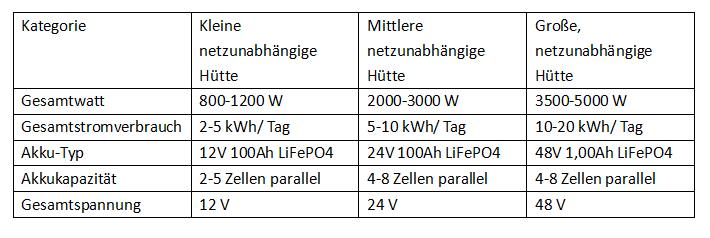
         Based on the power demand and the desired autonomy duration, we can select the appropriate battery bank voltage (12 V, 24 V, 48 V) and capacity (Ah) for the off-grid home. In general, the battery capacity should be sufficient for 2-3 days of autonomous power supply and account for seasonal increases in power demand.  


Using an example of a daily power consumption of 6640Wh, we can calculate:  


                Daily total power consumption x 2-3 days autonomy x 1.5 (seasonal increase) 

                = 6640Wh x 2-3 days x 1.5 

                = 19,920 - 29,880Wh  


         Therefore, we recommend selecting a battery storage system consisting of 4–6 lithium-ion batteries, each with a capacity of 6–8 kWh, as the main battery storage system for the off-grid home.

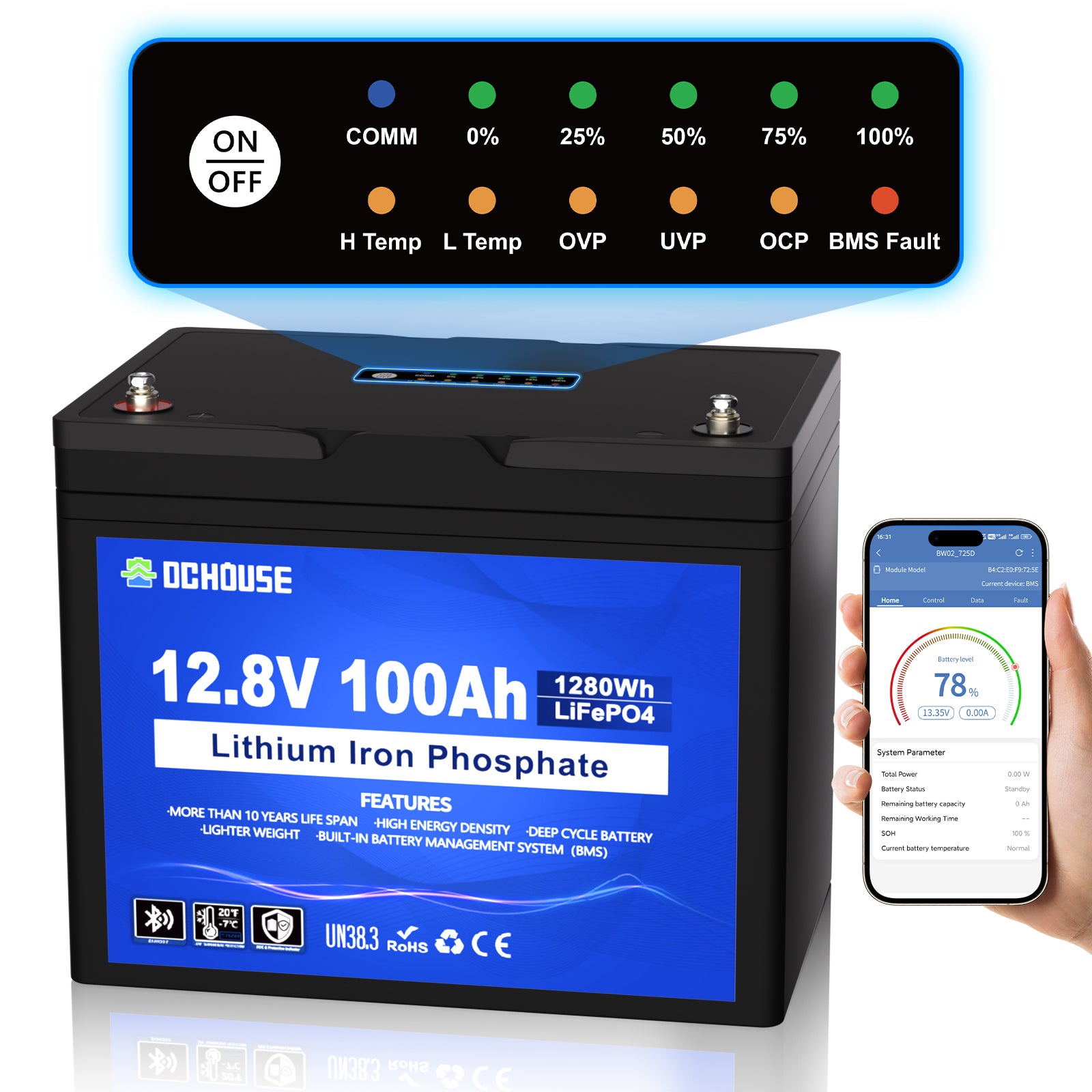
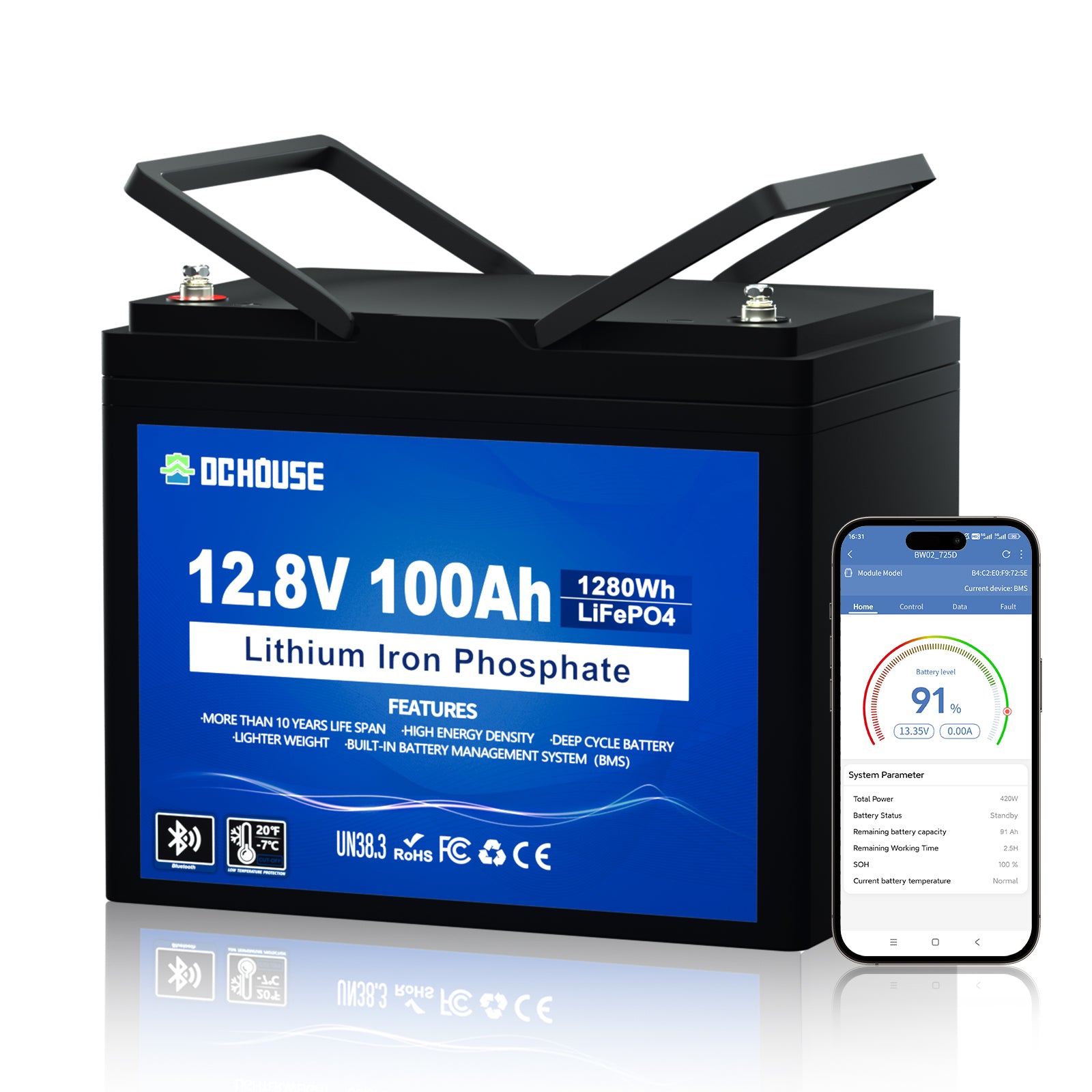
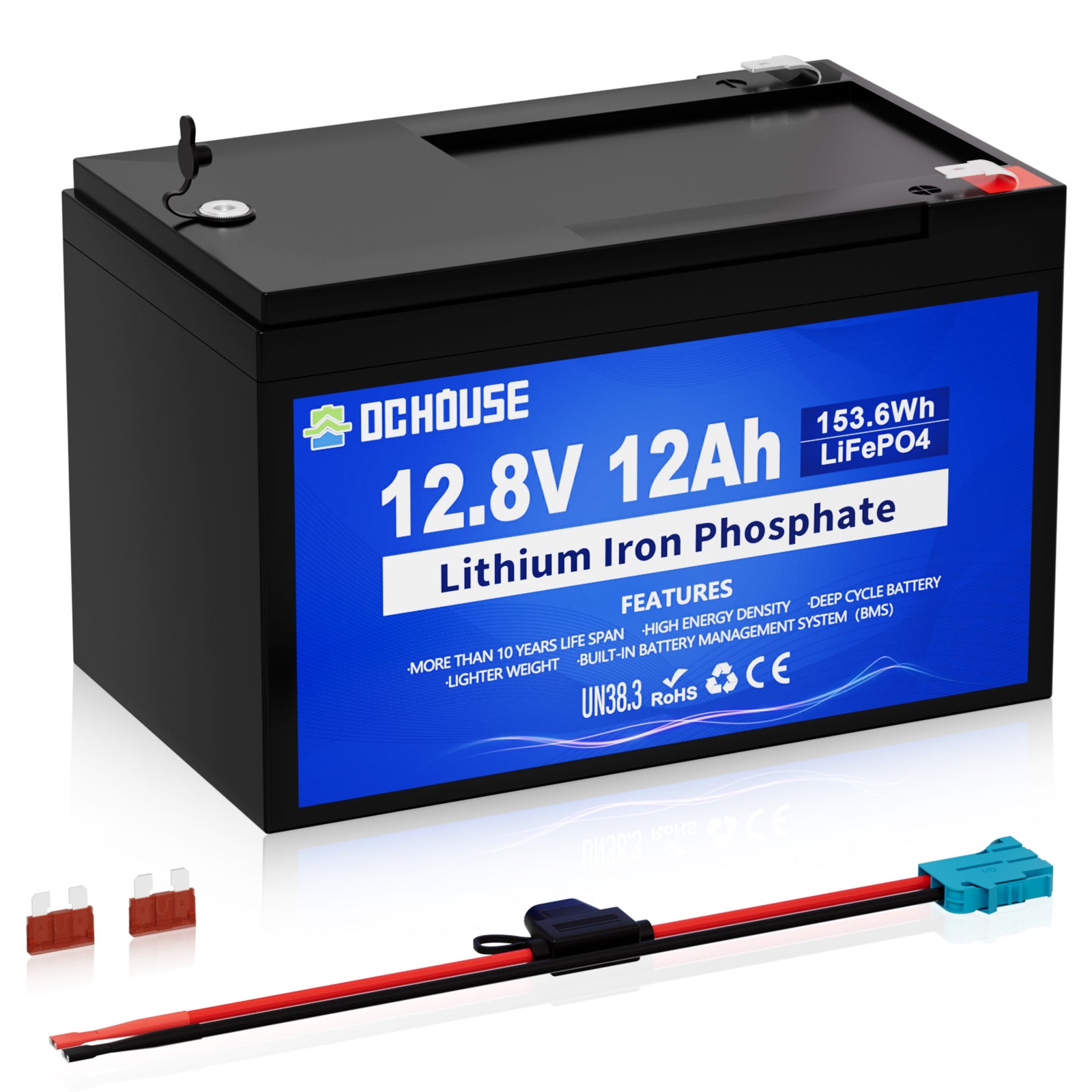
Recommended DCHOUSE LiFePO4 Lithium Battery Models for Off-Grid Cabins

Series and parallel connection of batteries 

  • To achieve the desired voltage, multiple batteries can be connected in series. For a 12-V system, four 12-V batteries would be connected in series. 
  • To increase the total capacity, multiple series-connected battery banks can be connected in parallel. This expands the total energy storage capacity.
  • Note that the capacity and internal resistance of each series-connected battery block should be well matched to avoid uneven charging and discharging.

Summary

        The battery system for an off-grid home requires comprehensive consideration of several factors. The key is to accurately estimate the power demand, choose the appropriate voltage and capacity, and ensure system reliability and power supply capacity. LiFePO4 batteries (lithium iron phosphate) are undoubtedly the best choice due to their excellent safety, lifespan, and energy density.  

        With the further development of renewable energy technologies and the continuous optimization of energy storage systems, off-grid living is moving in a more sustainable and environmentally friendly direction. In the future, we will see smarter energy management systems as well as more powerful and environmentally friendly battery technologies in off-grid homes. At the same time, complementary renewable energy sources such as solar and wind energy will continue to improve and offer a cleaner and more stable power supply for off-grid households.  

         I hope these recommendations are helpful and wish you an ever more wonderful life off the grid!